
Stadium
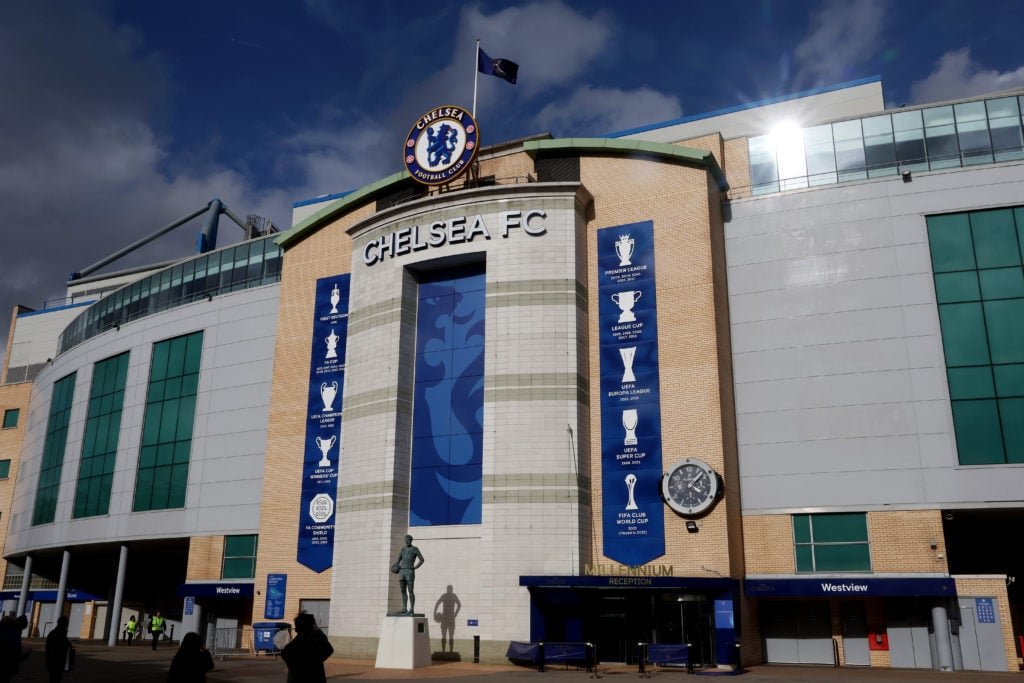
Photo by Clive Rose/Getty Images
History of the Stadium
Welcome to Stamford Bridge
The iconic home of Chelsea Football Club — a ground steeped in history, pride, and passion. Since the club’s founding in 1905, Stamford Bridge has stood as the beating heart of the Blues, witnessing unforgettable triumphs, legendary players, and generations of loyal supporters.
But the Bridge’s story began long before Chelsea kicked its first ball. The stadium first opened its gates on April 28, 1877, originally serving as the home of the London Athletic Club. For nearly thirty years, the venue echoed with cheers from athletics events rather than football chants.
Everything changed in 1904, when Henry Augustus “Gus” Mears and his brother Joseph Theophilus Mears purchased the grounds. Inspired by the rapid rise of football across England, the Mears brothers dreamed of creating a grand football arena that would rival the best in the country.
To bring their vision to life, they turned to Archibald Leitch, the celebrated architect behind some of Britain’s most iconic football grounds. His signature steel-and-brick design laid the foundation for what would become one of the most recognized stadiums in world football — Stamford Bridge.
Over the decades, the Bridge has evolved with the times but has never lost its soul. From roaring crowds under the Shed End to European nights under the lights, it remains not just a stadium — but a symbol of Chelsea’s heritage, ambition, and unwavering spirit.
| Stadium Name | Stamford Bridge |
|---|---|
| Year Opened | 1877 |
| Capacity | 40,341 |
Chelsea Emerged from Fulham Rejecting Stamford Bridge
The Evolution of Stamford Bridge
Stamford Bridge quickly took shape under Archibald Leitch’s masterful design — a 120-yard main stand stretching along the east side, crowned by his trademark pedimented central gable. The open-bowl layout was supported by thousands of tons of soil excavated from the nearby construction of London’s Piccadilly Line, symbolically tying the stadium to the very heartbeat of the city it represents.
Initially, the Mears brothers intended their new ground for Fulham FC, offering it for lease. When Fulham declined and chose to remain at Craven Cottage, the Mears brothers took a bold step — they would form their own football club. And so, in April 1905, joined by Tom Lewin Kinton and John Henry Maltby, Chelsea Football Club was born.
For decades, Stamford Bridge stood proudly with minimal change, until the 1930s ushered in a new era. The Shed End — destined to become one of football’s most iconic terraces — was introduced when the Greyhound Racing Association added a partial roof over the south stand to protect spectators during races held around the pitch.
Its distinctive, makeshift structure led fans to affectionately nickname it “The Shed”, a name that would endure and later be officially adopted when the Fulham Road End was rebuilt in 1997.
Leitch’s influence extended further in 1939, when he designed a covered North Stand. Delayed by the outbreak of World War II, it finally opened in 1945, standing proudly for nearly thirty years before giving way to modern redevelopment.
By 1993, Stamford Bridge began its transformation into an all-seater stadium, meeting new safety standards and ushering in a modern era. The West Stand’s first redevelopment had already begun in 1965, paving the way for the world-class arena Chelsea fans know and love today — a timeless blend of history, passion, and architectural evolution.
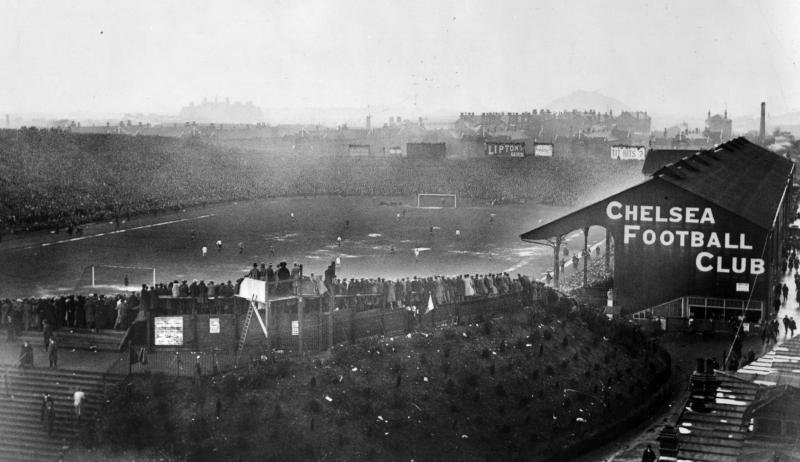
Photo by Alfred Hind Robinson/A H Robinson/Hulton Archive/Getty Images
Ken Bates Saved Stamford Bridge and Rebuilt Chelsea’s Home
The Rebirth of Stamford Bridge
Financial hardship struck Chelsea in the 1980s, pushing the club perilously close to collapse and ending the Mears family’s historic stewardship. Businessman Ken Bates stepped in to acquire Chelsea for a symbolic £1 in 1982, but he soon inherited a deeper challenge — the very future of Stamford Bridge was under threat.
The stadium’s freehold had been sold years earlier to property developers, sparking a decade-long struggle for control. As redevelopment plans loomed and uncertainty grew, Chelsea fought tirelessly to protect their home. Salvation came in 1992, when the developers went bankrupt — allowing Bates to secure the club’s return to rightful ownership in 1993.
With the Bridge reclaimed, a new era of transformation began. The club embarked on a sweeping redevelopment program to modernize a ground that had fallen into disrepair. The North Stand, a striking two-tier structure, was the first major milestone — later renamed the Matthew Harding Stand in honor of the beloved vice-chairman following its completion in November 1994.
The Shed End soon followed, restoring one of Chelsea’s most iconic terraces. Attention then turned to the West Stand, though progress was slowed by planning disputes that delayed its upper tier for two years. When finally completed in 2001, the 13,500-seat West Stand stood as a symbol of resilience — and marked another decisive step toward the world-class Stamford Bridge we know today.
How to Get to Stamford Bridge
Reaching Stamford Bridge couldn’t be easier — the stadium’s prime position in west London makes it one of the most accessible grounds in the Premier League.
For most supporters, the quickest route is via the London Underground. The nearest station, Fulham Broadway on the District Line, is just a few minutes’ walk from the stadium, with clear signposts guiding fans from the platform straight to the ground.
Those traveling by Overground or National Rail can alight at West Brompton or Imperial Wharf, both roughly a 15-minute walk away and connected by regular train services from across London.
Located directly on Fulham Road, Stamford Bridge is also perfectly placed for supporters arriving on foot from nearby areas like Fulham, Earl’s Court, and West Kensington. Several London bus routes — 14, 211, and 414 — stop right outside the stadium, with additional stops along Fulham Road providing easy access from all directions.
For cyclists, Chelsea offers secure on-site bike storage, allowing fans to travel sustainably while avoiding the crowds.
The club, however, strongly advises against driving to the stadium. Matchday parking in the local area is extremely limited, with residents-only restrictions in place on surrounding streets. Visitors arriving by car are encouraged to use designated car parks further afield and complete their journey by public transport or on foot.
No matter how you travel, arriving early ensures you can soak up the atmosphere — and take in the history — of one of football’s most iconic homes.
Address
Stamford Bridge: Fulham Road, London, SW6 1HS